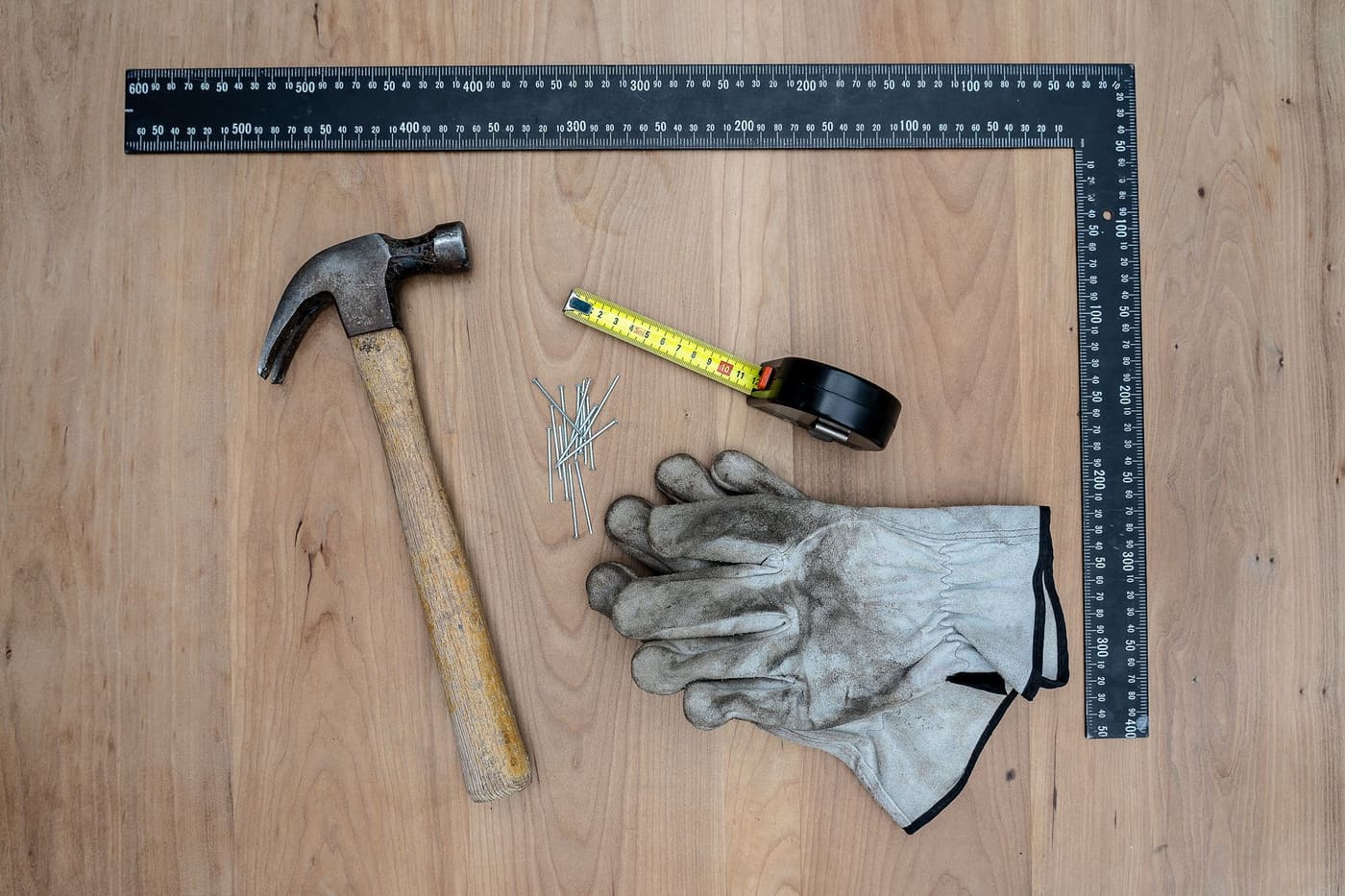
Spend more on tools that affect accuracy, safety, or daily reliability: your cordless drill and its battery platform, a tape measure and level, a ladder, safety glasses and respirators, and quality blades and bits. Buy cheap for tools you use rarely or that do simple jobs: hammers, pry bars, putty knives, basic screwdrivers, utility-knife handles, and paint trays. A rule that holds up well is to pay for precision and safety, and save on anything that is basically a lever or a piece of metal.
A cheap tool that fails halfway through a job can cost more than a better one that works, once you count a second trip to the store and the project time lost. But the opposite also happens: people pay premium prices for tools they will use twice. The sections below sort tools by how much quality changes the result. No brands are recommended here, and prices are left out because they change.
The deciding questions
Before you buy, ask four questions about each tool.
- How often will you use it? A tool used weekly earns a higher price. One used once a year may be a rental or a budget buy.
- What happens if it fails? A bad ladder can cause a serious fall, and a bad hammer just bends a nail.
- Does accuracy matter? A level or square that is off by a small amount ruins every measurement that follows.
- Is it part of a system? Cordless tools share batteries, so your first purchase commits you to a brand’s battery platform.
If the answer to the first three is “often, badly, yes,” invest. If it is “rarely, not much, no,” go cheap.
Invest: cordless drill and battery platform
A cordless drill/driver is the one tool nearly every DIY job touches. Quality shows up in battery life, clutch settings, chuck grip, and how the tool feels after an hour of use.
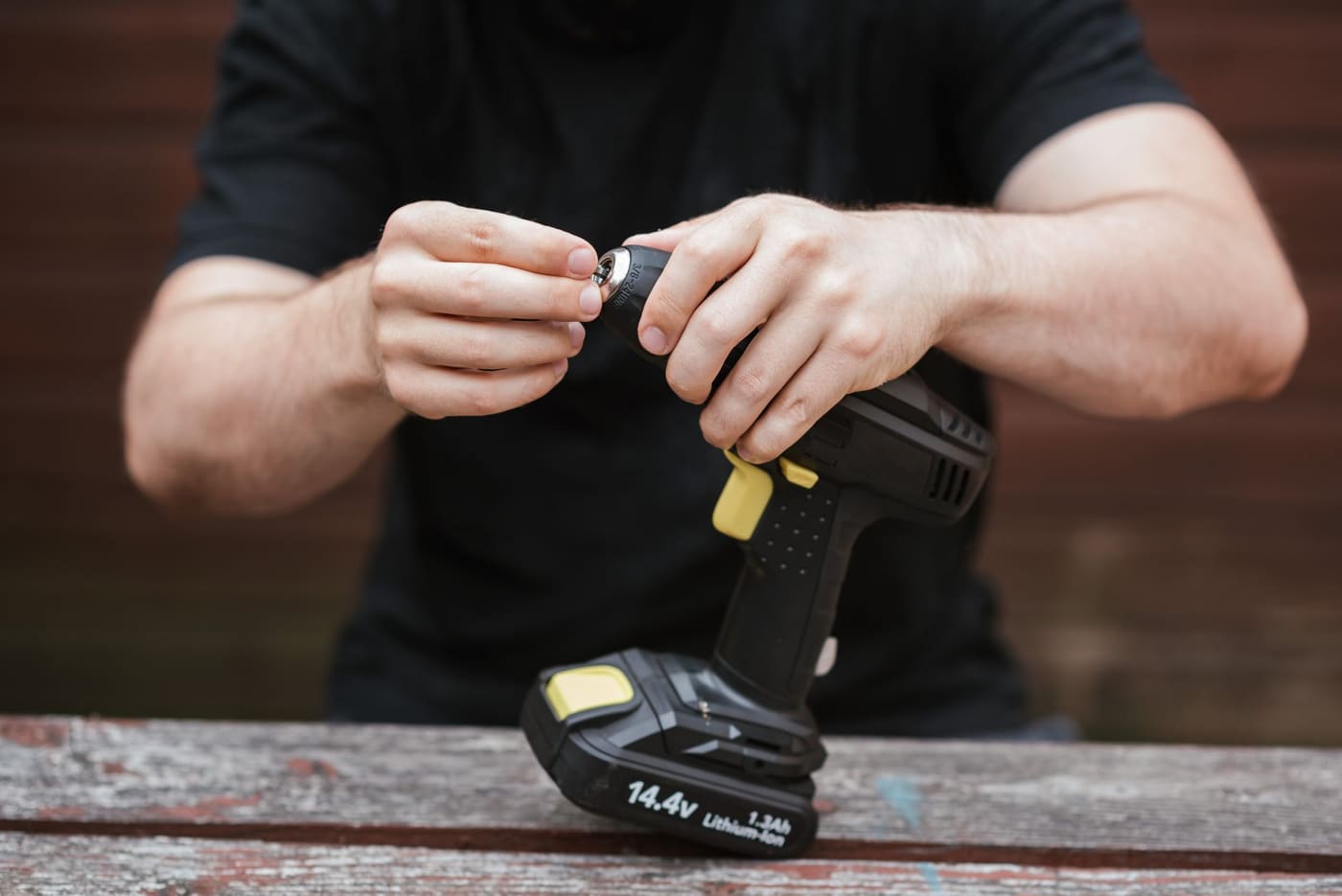
- Voltage: 18V or 20V (max) class tools handle most home work. Smaller 12V drills are lighter and good for tight spaces and light jobs.
- Brushless motors: These generally run cooler and last longer, and are worth the extra money in mid-range kits.
- Batteries: Two batteries mean one charges while you work. A kit with a drill, impact driver, and two batteries costs noticeably more than a budget single-battery drill, and the second battery is often what makes the difference in practice.
- Chuck size: A 1/2-inch chuck holds larger bits, and a 3/8-inch chuck suits lighter work.
Choose a battery system that offers the other tools you may want later, such as a circular saw, oscillating tool, or work light. Mixing platforms means buying extra chargers and batteries.
Invest: measuring and layout tools
Cheap measuring tools cause costly errors. A tape measure with a worn hook, faded markings, or a floppy blade makes every cut a guess.
- Tape measure: A 25-foot tape with a wide, stiff blade (about 1 inch wide) that stands out several feet unsupported is worth a little extra. Look for clear markings and a hook that slides slightly to account for its own thickness.
- Level: A 24-inch or 48-inch box-beam level with sealed vials costs more than a plastic one but holds its accuracy. Check any level by drawing a line on a wall, flipping the level end for end, and seeing whether the bubble reads the same.
- Speed square or combination square: Cheap squares can be out of square. Check by drawing a line against a straight board edge, flipping the square, and comparing the line.
- Stud finder: Mid-range models with multi-mode scanning are more reliable than the cheapest ones, but always confirm before drilling, since pipes and wires can hide behind drywall.
Invest: ladders and safety gear
Ladders and safety gear are where cheap becomes risky.
Ladders. Choose the right height and a duty rating that covers your weight plus tools and materials. OSHA’s ladder guidance lists Type I (heavy duty) at 250 pounds, and other types carry other ratings, so read the label. A fiberglass step ladder rated Type I or higher is a common household choice, and fiberglass is the safer material near electrical work, though no ladder belongs near power lines. Keep three points of contact, keep your body inside the side rails, never use the top step or top cap, and place it on firm, level ground. For roof access or tall exterior work, hire a pro.
Safety gear.
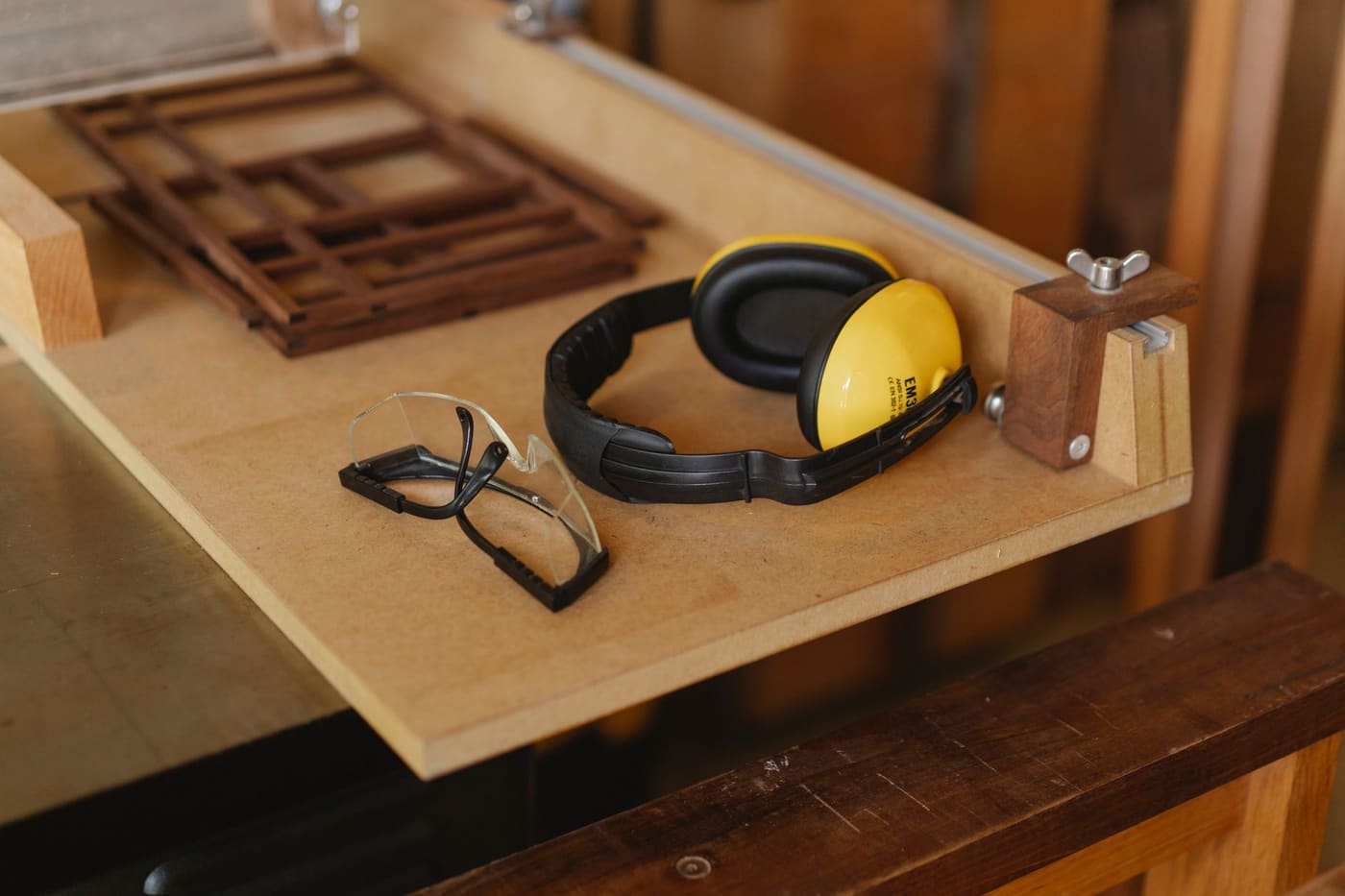
- Safety glasses with an impact rating are cheap and non-negotiable.
- Respirators or dust masks rated for the job: an N95 for general dust, and a half-mask respirator with organic vapor cartridges and particulate filters for paint vapors and solvents. An N95 does not protect against vapors, so do not substitute a paper dust mask for a respirator when chemicals are involved.
- Hearing protection for saws, sanders, and routers.
- Work gloves that fit well and match the task.
Invest: blades, bits, and consumables
Consumables are the quiet money-savers. A good drill bit or saw blade cuts cleaner, lasts longer, and demands less force, which makes the work safer.
- Drill bits: Quality titanium-coated or cobalt bits stay sharp, and masonry bits are essential for brick and concrete.
- Saw blades: A fine-tooth blade for plywood and trim leaves a cleaner edge. A dull blade can bind and kick back.
- Utility knife blades: These are cheap, so replace them often. A sharp blade cuts more safely than a dull one.
- Sandpaper: Name-brand or good-quality abrasives often last longer than the cheapest packs.
Buy cheap: simple hand tools and basics
Some tools have no electronics, no precision, and very little that can wear out. These are where you can save.
| Tool | Cheap is fine because | What to check |
|---|---|---|
| Claw hammer | It is a weighted lever | Solid handle, firmly attached head, comfortable grip |
| Putty knives and scrapers | They are flat steel | Flexible blade for spackle, stiff for scraping |
| Basic screwdrivers | Simple shafts | Tips that fit snugly in screws without rounding |
| Pry bar | Metal on metal | Thick, forged steel |
| Paint tray, drop cloths, tarps | Disposable by nature | Enough coverage |
| Utility knife body | Holder for a blade | Locks securely |
| Caulk gun | Simple mechanism | Smooth push, drip stop, a decent ratchet |
| Pliers and adjustable wrench | Moderate stress | Tight jaws, no wobble |
Plenty of inexpensive kits include these tools. If one wears out, replace it.
Rent or borrow: the rarely-used and the expensive
Tools you will use once or twice should not live in your garage. Rental centers often offer tile saws, floor sanders, power washers, carpet stretchers, and drain augers by the day, and some libraries and neighbors lend tools. Rent the item when:
- The job takes one weekend and you will not do it again.
- The purchase price is several hundred dollars or more.
- The tool is bulky, heavy, or needs maintenance.
Read the rental terms about damage and late return, and ask for a quick demonstration. For anything involving gas, structural cutting, or high voltage, hire a licensed pro instead.
Watch out for bundles and bargains
Big tool sets with 200 pieces look like value but often include low-quality pieces you will never use. Build a kit from a core of quality tools plus a few cheap extras. Check return policies, read reviews that talk about long-term use, and compare features such as battery count and warranty length.
Buy used where it makes sense: hand tools, ladders in good condition (inspect rails, rungs, and feet carefully), and corded tools often show up secondhand at lower prices. Avoid used safety equipment such as helmets, respirators, and anything with signs of damage or age.
Match purchases to your actual projects
The best tool budget follows your project list. Plan your first few jobs, then buy what they require, in line with the approach in planning a DIY project before you start. For a no-nonsense baseline of what to own, the tools and materials you actually need for basic DIY lists the starter set. If you are still deciding what to take on, how to start DIY projects without getting in over your head pairs well with a modest tool budget.
Where this comes from
The ladder points follow OSHA’s portable and step ladder guidance and the respirator point follows NIOSH respirator guidance. The invest-versus-save split is a common-sense rule based on what fails and what it costs when it does, not a tested ranking of products. Prices, rental rates and warranty terms change, so check them at the store or rental counter.