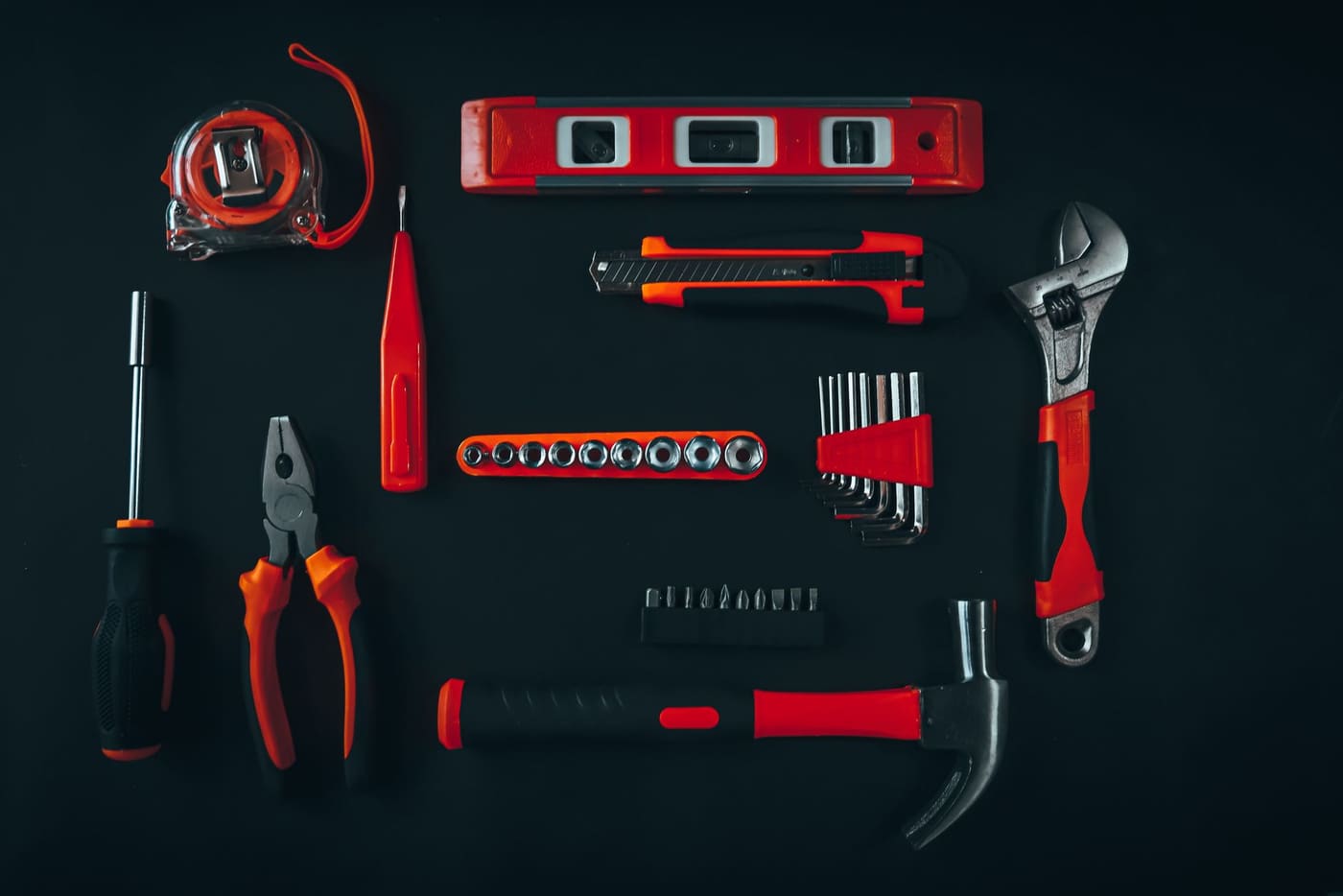
For basic DIY you need about a dozen tools: a 25-foot tape measure, a level, a cordless drill/driver with bits, screwdrivers, a claw hammer, a utility knife, a stud finder, pliers, an adjustable wrench, safety glasses, work gloves, and a stepladder. Add a small stock of materials, such as screws, wall anchors, spackle, caulk, painter’s tape, sandpaper, and a few paint supplies, and you can handle most hanging, patching, painting, and small repair jobs. Prices vary too much by quality and region to quote, so buy in the order your projects need rather than all at once.
You do not need a workshop. You need a short list of tools that cover many jobs, and the right small materials to go with them.
Measuring and marking tools
Most DIY mistakes start with a bad measurement. These tools keep the work accurate.
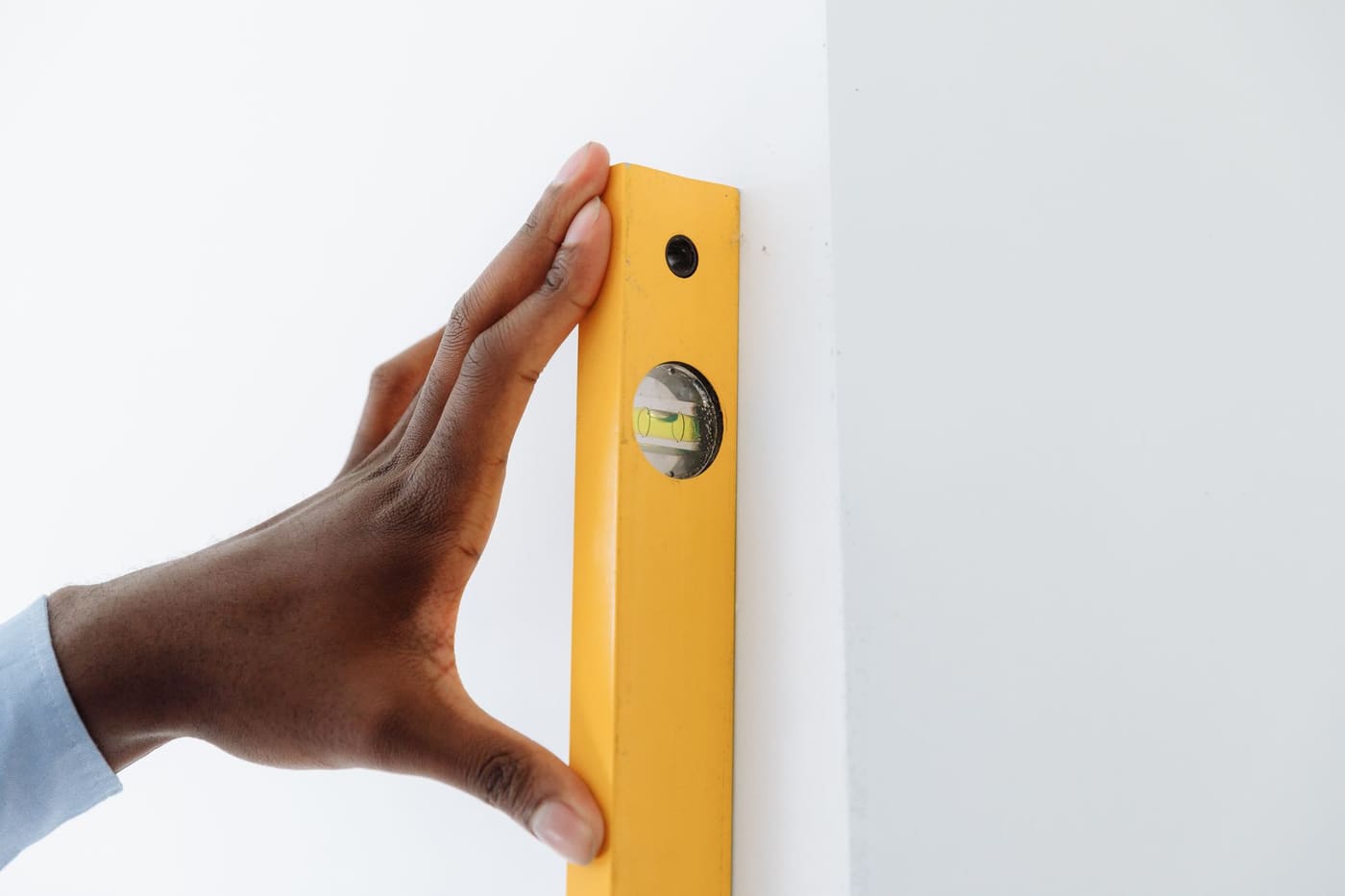
- Tape measure (25 feet): A 1-inch-wide blade stays rigid when extended.
- Level (24-inch): Checks that shelves, frames, and fixtures are straight. A torpedo level, around 9 inches, fits in tight spaces.
- Pencil and a small speed square: The square makes square, straight marks on boards and checks corners.
- Stud finder: Finds the framing behind drywall so heavy items go into solid wood. Pipes and wires also hide in walls, so treat a stud finder as a guide and not a guarantee.
A tip: measure the same thing twice and write the number down before cutting or drilling. “Measure twice, cut once” is practical advice, not just a saying.
Fastening tools
These tools put things together and take them apart.
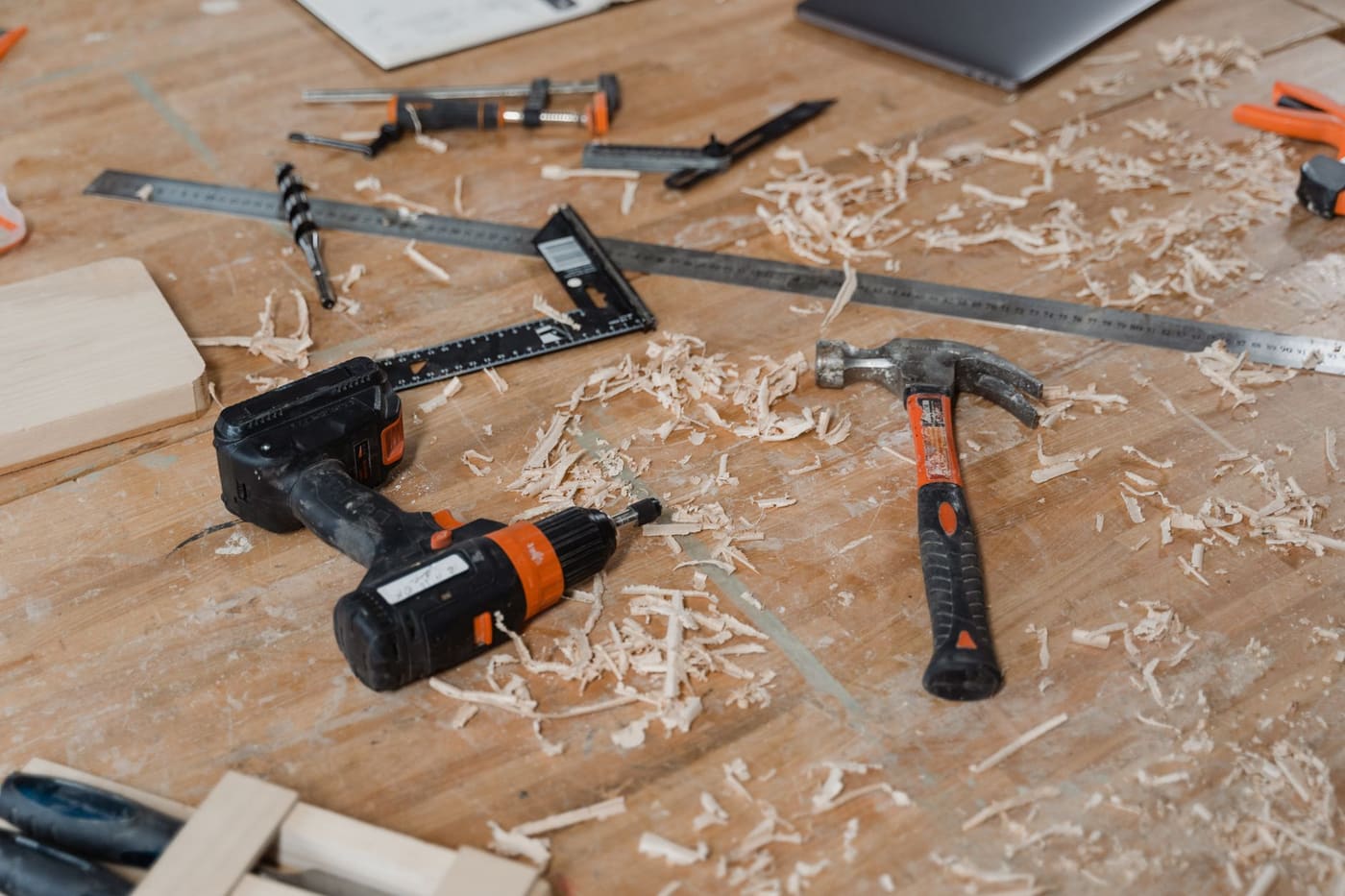
- Cordless drill/driver: The most useful power tool for beginners. An 18V or 20V (max) model with two batteries, a charger, and a case is a common choice. A 12V model is smaller and works for lighter jobs.
- Drill and driver bits: Get a set with Phillips, flathead, and square-drive bits, plus a range of twist drill bits from 1/16 inch to 1/4 inch.
- Screwdrivers: A set of Phillips and flathead sizes, or a multi-bit driver, for small adjustments and tight spots.
- Claw hammer: A 16-ounce hammer handles most nailing and light demolition.
- Pliers and an adjustable wrench: Needle-nose pliers for small items, slip-joint pliers for gripping, and a 10-inch adjustable wrench for fittings.
- Hex key set: Needed for furniture assembly and many fixtures.
Cutting and shaping tools
- Utility knife: Cuts drywall paper, cardboard, caulk tubes, tape, and carpet. Replace blades often, since a dull blade slips and causes cuts.
- Hand saw: A fine-tooth saw handles small wood and trim jobs.
- Putty knife and scraper: A 2-inch flexible knife for spackle and a stiffer scraper for removing old caulk and paint.
- Sanding block and sandpaper: Stock 120 and 220 grit for smoothing patches and prepping surfaces.
You can skip a table saw, miter saw, and router until a project calls for them. Renting is often a better path for these than buying.
Safety gear is part of the kit
Do not treat these as optional extras.
- Safety glasses: Wear them whenever you cut, drill, sand, hammer, or use chemicals.
- Work gloves: Protect your hands from splinters and sharp edges. Take them off around spinning tools such as drills, so they cannot catch.
- Dust mask or respirator: A basic N95 helps with sanding dust but does not protect against vapors. For paint fumes and solvents, NIOSH guidance calls for a half-mask respirator with organic vapor cartridges and particulate filters.
- Hearing protection: Needed for loud tools.
- A stepladder: A 4 to 6 foot stepladder with a duty rating that covers your weight plus tools covers most indoor jobs. OSHA’s ladder guidance says to keep three points of contact, keep your body inside the side rails, and never use the top step or top cap.
If your home was built before 1978, the paint may contain lead and other old materials may contain asbestos. The EPA advises against dry sanding or scraping suspect paint, and says asbestos can only be confirmed by a laboratory. Do not sand, scrape, or demolish suspect material before you know, and hire a lead-safe certified renovator or licensed professional if results are positive.
Fasteners and hardware
Choosing the right fastener matters more than the tool.
| Fastener | Best for | Notes |
|---|---|---|
| Wood screws (#8, 1.5 to 3 inches) | Wood to wood, mounting into studs | Use pilot holes to prevent splitting |
| Drywall screws | Hanging items to studs and drywall to framing | Coarse thread for wood studs |
| Plastic expansion anchors | Light loads into drywall | Check weight rating |
| Toggle bolts | Heavier items in hollow walls | Rated for more weight than plastic anchors |
| Self-drilling drywall anchors | Medium loads | Quick to install |
| Masonry anchors | Brick or concrete | Need a masonry bit |
| Finishing nails and brad nails | Trim and light wood joining | Set below the surface and fill |
A small assortment box of screws and anchors saves many trips. Always use anchors rated above the weight of what you hang, and always find a stud for heavy items such as large mirrors or shelving with books.
Repair and finishing materials
These materials cover most patching and cosmetic jobs.
- Lightweight spackle: For nail holes and small dings. Apply, let it dry, sand smooth, and spot-prime.
- Joint compound: For larger patches and seams, which take multiple thin coats and long drying times.
- Paintable acrylic latex caulk: Fills gaps at trim and baseboards. For wet areas, use a silicone or kitchen-and-bath caulk.
- Wood filler and wood glue: For repairs to trim and furniture.
- Painter’s tape: Standard blue or green for most jobs, and delicate-surface tape for fresh paint.
- Sandpaper, tack cloth, and rags.
- Duct tape, masking tape, and zip ties: Not for every task, but constantly useful.
Using the wrong material causes problems. Interior latex caulk in a shower can fail and let water behind it. Plain spackle on a deep hole can shrink and crack. Match the material to the job and read the label.
Painting basics
If you plan to paint, add:
- A 9-inch roller frame and 3/8-inch nap roller covers
- A 2 to 2.5-inch angled brush
- A roller tray or 5-gallon bucket with a grid
- Canvas or plastic drop cloths
- An extension pole
- A putty knife and sanding sponge
- A stir stick and a can opener or paint-can tool
Full prep and application steps are in how to paint a room so it actually looks good. In older homes, rule out lead before sanding, and never pour leftover paint down the drain.
Where to buy cheap and where to pay more
You do not need premium everything, but a few items repay a higher price. Accuracy tools, the drill and its batteries, ladders, and safety gear deserve quality, while simple hand tools can be basic. For a detailed breakdown, see what to buy cheap versus invest in. Buy in the order your projects need, instead of starting with a 200-piece set that includes tools you will never use.
Storage and upkeep
A tool you cannot find is a tool you do not own. A small tool bag or box with the essentials keeps everything together. Store cordless batteries indoors away from extreme heat or cold, and follow the manufacturer’s charging and storage instructions. Wipe tools after use, keep blades sharp, and replace worn bits. Keep a small first-aid kit nearby.
When tools stop being enough
Having tools does not mean every job is DIY-appropriate. Electrical panel work, new circuits, gas lines and appliances, structural walls, roofing, and major plumbing are jobs for licensed professionals, and local codes may require permits and inspections. If you are choosing your first job, starting DIY projects without getting in over your head can help you choose one that matches your kit.
To plan your boards and cuts, use the cut list and board estimator and DIY tool buying guide.
Where this comes from
The ladder points follow OSHA’s ladder safety guidance, the respirator point follows NIOSH respirator guidance, and the lead and asbestos points follow the EPA’s guidance for homeowners. The tool list itself is common beginner practice and product labeling, not a tested ranking. Tool prices, anchor ratings and product formulas change, so read the package and check current prices at the store.